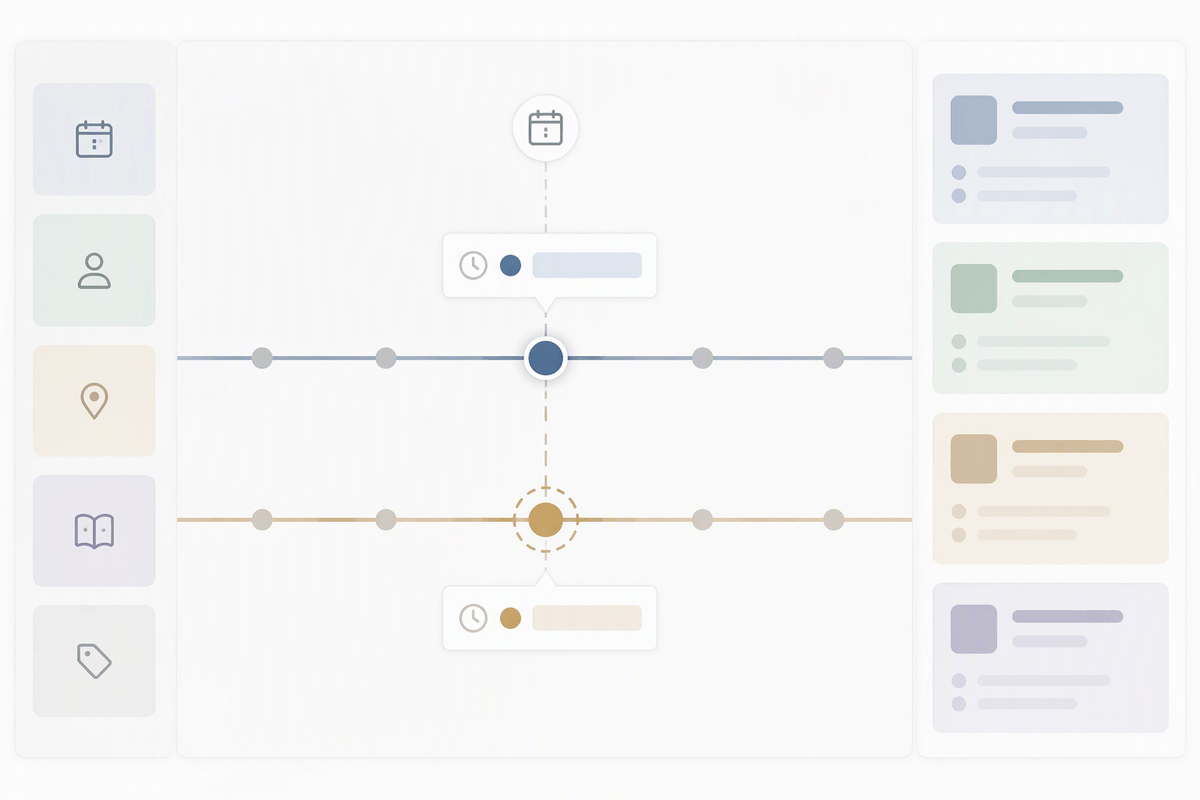
Why use AI for literature reviews now?
You have a week to “get up to speed” on a topic with hundreds of papers, and the hard part is not reading faster—it is deciding what deserves attention, what is redundant, and what claims survive contact with methods and data. AI helps most where the workload is mechanical: extracting key metadata, clustering themes, comparing definitions, and turning scattered notes into structured questions you can test against the sources.
It matters now because the volume and pace of publication makes manual triage alone a bottleneck, and good models can compress first-pass work into hours. The speed increases the risk of confident mistakes, so AI only pays off when paired with verification habits.
Decide what you want AI to handle
Decide which tasks can be delegated before bringing AI into the research process. Routine work includes converting PDFs into searchable text, extracting citation details, organizing claims and supporting evidence into tables, and generating alternative keyword lists for database searches. AI can also help screen abstracts by identifying the likely study design, population, measures, and whether the methods appear suited to the research question. These uses save time while leaving the standards for evaluating evidence in the researcher’s hands.
The central judgments still require human oversight: choosing relevant theoretical frameworks, assessing the credibility of findings, and determining whether disagreements between studies reflect meaningful differences. One workable approach is to let AI prepare structured notes, then verify every important claim against the exact sentence, figure, or table in the original paper. Setting up templates and correcting early errors takes additional effort, but that preparation helps keep a faster workflow accurate and defensible.
Build a corpus you can actually trust

You know the feeling: your search results look “complete,” but when you skim the references you keep seeing papers you somehow missed. A trustworthy corpus starts with deliberate coverage. Combine at least two discovery paths: database queries (with synonyms, acronyms, and older terminology) and backward/forward citation chasing from a few anchor papers. Use AI to generate alternative keyword sets and to spot concept drift (“this field used to call it X”), but keep the inclusion rules explicit: time window, study types, domains, and what counts as “out of scope.”
Then make the corpus auditable. Store a single canonical citation record per item (DOI, title, venue, year), attach the PDF or stable copy, and log why it is included. De-duplicate aggressively; AI can help match near-identical titles, but you should confirm merges. The paywalls and missing PDFs will create blind spots. Track what you could not access so your review’s claims reflect your actual evidence base, not your search tool’s optimism.
Prompts that produce critique, not summaries
Broad prompts such as “Summarize this” often produce polished prose without showing whether a paper’s conclusions are justified. More focused questions encourage closer scrutiny of the evidence. Ask for a structured critique covering the central claim, the operational definition of each key concept, the study’s identification strategy or causal reasoning, and the strongest alternative explanation. Follow up by asking what evidence would disprove the claim and whether the researchers actually measured it. This produces specific questions that are easier to check against the original paper.
Comparing studies also reveals more than paraphrasing them individually. Provide two or three papers and ask where their methods differ, then identify which differences might change the estimated effect size or its interpretation. For empirical research, request a checklist covering threats to validity, including selection bias, measurement problems, confounding, and generalizability. Ask for one precise passage, figure, or table to consult for each issue, then verify the evidence before quoting it. Preparing these prompts takes extra effort, but the resulting critique helps pinpoint weaknesses without repeatedly rereading a paper to locate the critical detail.
Verification habits that prevent confident errors
You will catch most model errors by treating every “key claim” as a pointer you must trace back to the paper, not as information you can accept. When the model states a result, make it provide a location: page number, section heading, and whether it came from the abstract, results text, a table, or a figure caption. Then open the PDF and verify the exact sentence or value. If you cannot find it quickly, downgrade it to “unverified” in your notes instead of forcing a fit. This single habit also exposes when the model blends multiple studies, misreads hedged language, or confuses correlation with a causal claim.
Run a second check on coverage and bias, not just accuracy. For each theme you plan to write about, ask: “Which study types are missing here (null results, replications, industry reports, non-Western samples)?” Then sample a few papers the model did not rank highly and see whether they contradict the emerging story. This adds friction—especially when PDFs are messy and citation metadata is inconsistent—but it prevents a fast pipeline from quietly narrowing your evidence base.
From notes to synthesis and a real argument
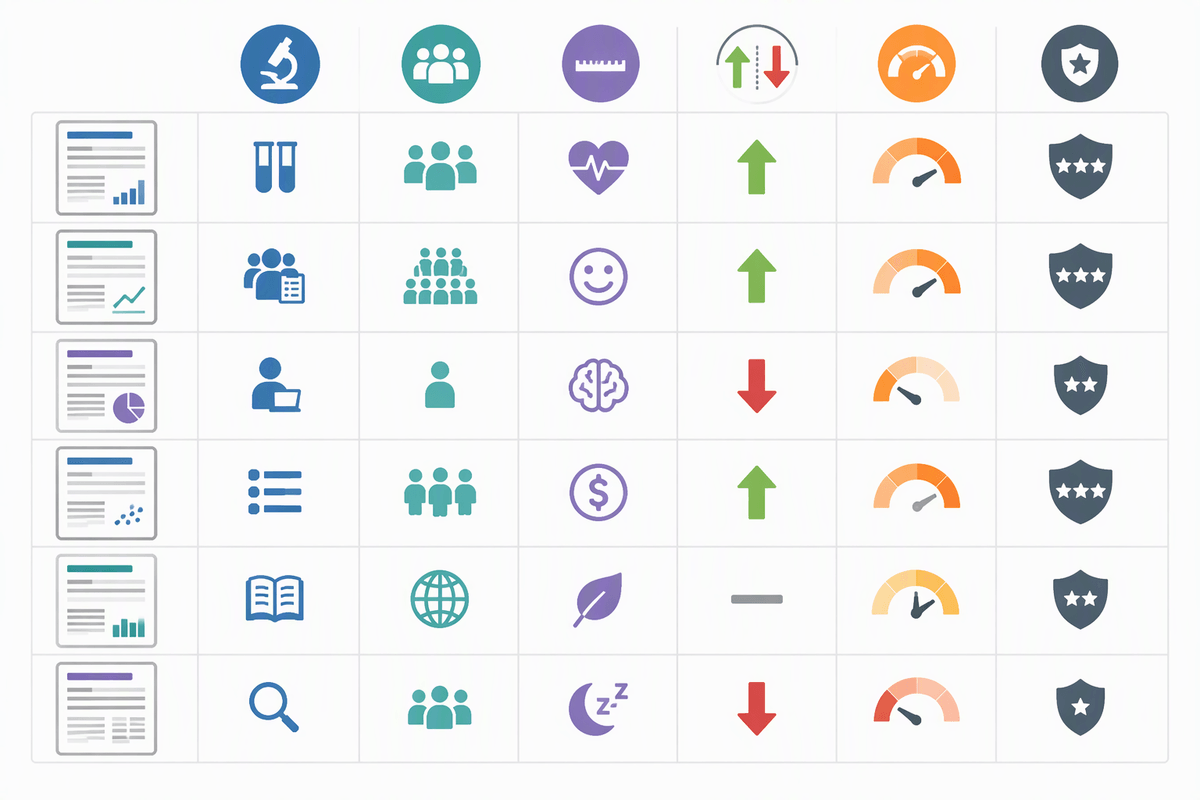
Research notes are difficult to synthesize when each paper is recorded differently. Organizing them into consistent fields makes comparisons more useful: central claim, proposed mechanism, research setting, method, key measure, main finding with its direction and uncertainty, and any concerns about credibility. AI can help reorganize rough notes into this structure and assemble a claims matrix that places studies side by side. The researcher still needs to decide which dimensions matter to the question; otherwise, the matrix becomes a neatly arranged collection of details without a clear analytical purpose.
Once studies are comparable, synthesis becomes a process of explaining their similarities and differences. Group the papers by factors that could account for their findings, such as identification strategy, measurement, population, or study duration. Ask the model to suggest two or three competing explanations for the overall pattern, then test each against the original papers, looking for findings that support or challenge it. This often requires returning to the PDFs to determine whether apparently similar concepts were measured in the same way and whether conflicting results reflect genuine disagreement or simply different terminology.
A defensible argument connects the research question to the available evidence through clearly stated reasoning. AI can help develop alternative outlines, with each paragraph identifying its claim, supporting evidence, and the findings that might change the interpretation. Every section should also acknowledge what the available studies cannot establish. This keeps the review grounded in the evidence rather than allowing a persuasive narrative to extend beyond what the research supports.
Ethics, transparency, and a sustainable workflow
You will be tempted to treat AI output as “neutral plumbing,” but it shapes what you notice and what you omit. Keep an audit trail: record which tools you used, the date you ran searches, and which steps were model-assisted (triage, extraction, clustering, drafting). When you paraphrase a paper via AI, mark it as such in your notes and preserve the trace back to the exact table, figure, or sentence you verified.
Privacy and rights are not abstract constraints. Do not upload unpublished drafts, sensitive data, or reviewer comments into third-party systems without approval. Budget for the ongoing costs: prompt templates, versioned corpora, and periodic re-checks when you add new papers. AI can accelerate your first pass, but your citations must point to sources you personally inspected.