Why this “new stage” feels different from past AI waves
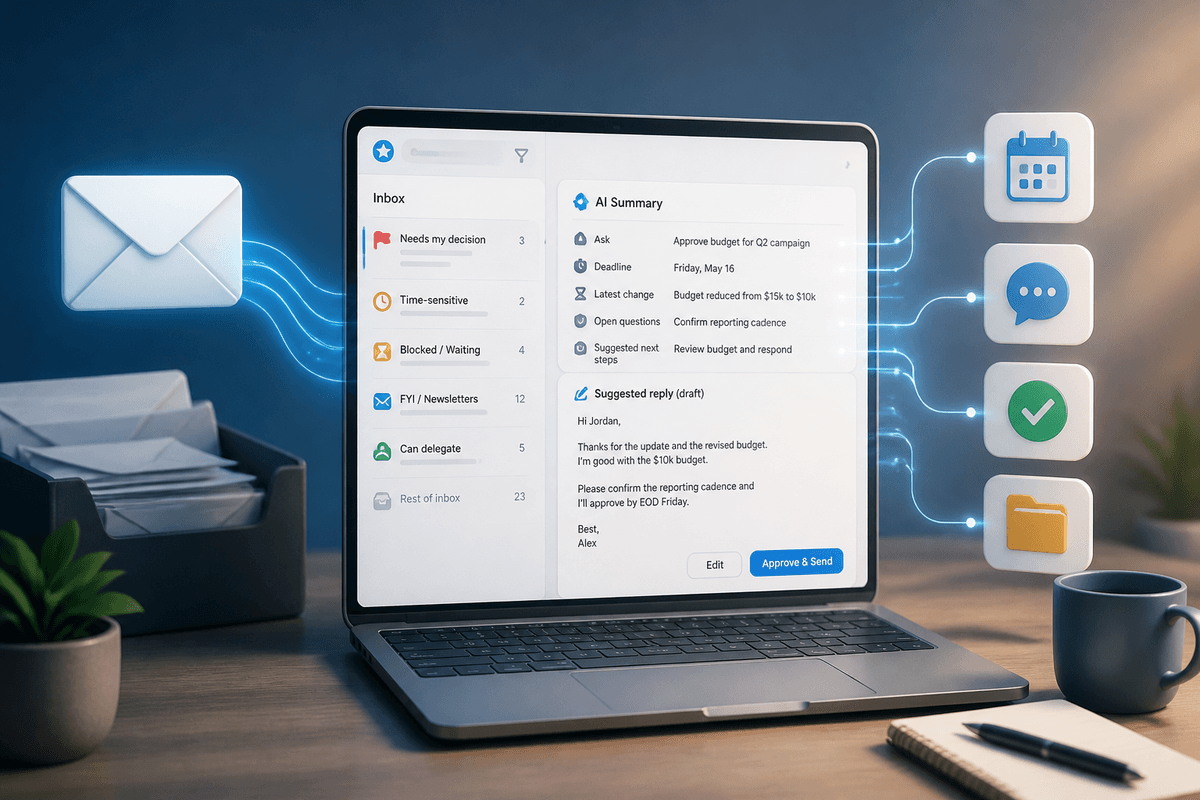
You can feel the difference because AI is no longer showing up mainly as demos or isolated features. It’s showing up as something teams try to run every day: in customer support, sales ops, coding workflows, analytics, and internal knowledge systems. The value is shifting from “the model is impressive” to “the system is reliable.”
That changes what matters. Latency, uptime, privacy, integration with existing tools, and who approves what output start to dominate the conversation. It also exposes real costs—usage bills, evaluation work, and the staff time needed to redesign processes—so the gap between a cool prototype and a durable product becomes easier to see.
From bigger models to usable AI systems and agents
A recognizable pattern is that teams stop arguing about which model is “best” and start asking what the model can safely and consistently do inside their workflows. A chatbot that answers questions is useful, but a usable system also knows when to ask a clarifying question, when to cite a source, when to escalate to a human, and how to fit into existing tools like email, ticketing, and CRM systems. The hard part becomes orchestration: prompts, retrieval from company documents, guardrails, and measurement.
“Agents” are a step beyond chat because they can take actions over time: create a draft, call an internal tool, check results, and revise before handing off. That sounds like automation, but it comes with new failure modes—silent mistakes, looping behavior, and unexpected tool calls—so teams often constrain agents to narrow tasks, add approvals, and accept extra engineering and monitoring cost to make the behavior predictable.
Progress now hits constraints: compute, data, latency, and cost
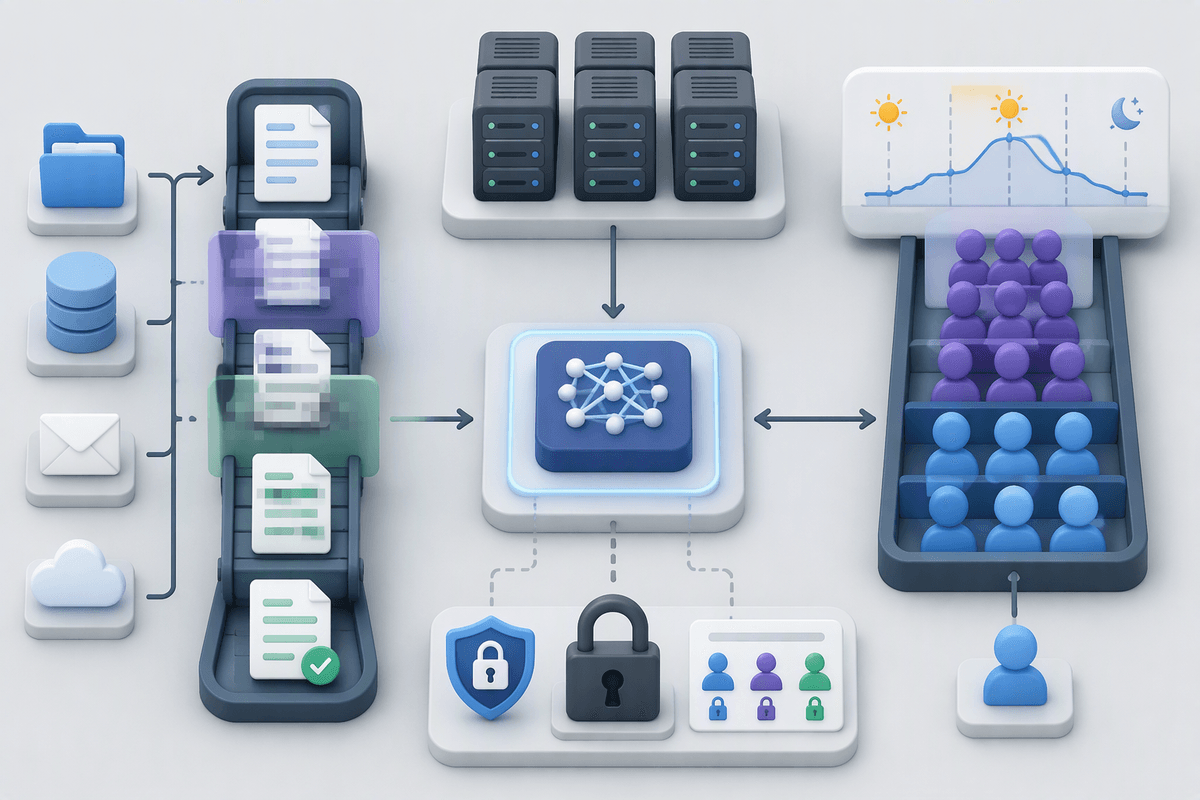
A common surprise after the first successful pilot is that “making it work” isn’t the hard part—making it work at scale is. Bigger models tend to demand more compute, which means higher per-request cost and more waiting time. If your product needs sub-second responses, or you have to serve thousands of users during business hours, latency and throughput stop being abstract metrics and start shaping the design.
Many organizations don’t have clean, permissioned, up-to-date text that’s ready to be retrieved and cited, and they often can’t freely train on customer data. That pushes teams toward careful document pipelines, redaction, and access control—work that doesn’t look like “AI,” but determines whether the system is trustworthy.
The practical result is that progress looks less like magic leaps and more like budgeting trade-offs: smaller models, caching, batching, on-device options, and tighter scopes to keep bills, delays, and risk within acceptable bounds.
New capability stack: multimodal input, memory, and tool use
When you watch how people actually use AI at work, you see why the capability stack is changing. They don’t just want to paste text into a box. They want to drop in a screenshot of an error, a photo of a damaged part, a chart from a deck, or a voice note from a customer call and get a usable next step. Multimodal input matters because it matches how information shows up in real processes, but it also raises practical issues: sensitive images, inconsistent quality, and the need to log what the system “saw” for audit and debugging.
Memory is the other shift, and it’s easy to misread. In practice it often means lightweight, controlled state: a preference, a project context, a short history of what’s been tried, or a set of approved facts pulled from internal systems. Keeping that memory correct and permissioned is work, and stale context can be worse than none.
Tool use turns AI from “advisor” into “operator”: search, look up an order, run a report, open a ticket, draft an email. Every tool call adds latency, cost, and a new place for failures, so teams win by making tools narrow, observable, and easy to roll back.
Build vs buy: APIs, open models, and on-device options
A familiar moment comes when a pilot works and someone asks, “Should we just keep calling an API, or should we run our own model?” Buying via an API is usually the fastest route to a real product: you get strong baseline quality, rapid model upgrades, and less infrastructure to run. The trade-off is dependency. Pricing can shift, rate limits can bite at peak hours, and data-handling requirements may force extra steps like redaction, logging controls, or vendor reviews.
Running open models (or a managed “bring your own model” setup) can make sense when you need tighter control: consistent behavior, predictable costs at high volume, regional data residency, or deeper customization. But “owning” the model often means owning the operational burden too—GPU capacity planning, performance tuning, security patching, and a constant evaluation loop to catch regressions. Teams also underestimate integration costs: retrieval pipelines, permissions, and monitoring tend to dominate the schedule.
On-device options are the pragmatic third path for some experiences: faster responses, offline use, and keeping sensitive inputs local. The device models are smaller, hardware varies widely, and shipping updates across fleets is slow, so many products land on hybrids: small local models for quick tasks, plus a server model for heavier work.
Safety and governance move from ideals to daily engineering work

You see the shift when a team tries to put an agent in a real workflow and realizes “safe” isn’t a policy statement, it’s a set of defaults and checks. Who is allowed to ask for a refund? Which tools can the system call, with what parameters, and how often? What does it do when a document is restricted, a request is ambiguous, or the model is not confident? The answers end up living in code: allowlists, permission gates, human approvals, and audit logs that make actions explainable after the fact.
Governance also becomes measurable. Teams define what “good” looks like for their domain—accuracy on key intents, refusal behavior, leakage tests, and the rate of costly mistakes—then run evaluations in CI like any other dependency. This work is ongoing and expensive: edge cases change, policies evolve, vendors update models, and monitoring needs real time and staffing to keep incidents from becoming customer-facing failures.
A practical next-step roadmap for teams entering this stage
A practical starting point is to pick one workflow where the pain is obvious and the success criteria are measurable: faster resolution, fewer handoffs, higher-quality drafts, or fewer repeated questions. Map the “last mile” details before you build: what systems it must read from, what it can change, who signs off, and what counts as an error. Ship a thin version behind limited access, add logging that captures inputs, retrieved sources, tool calls, and outcomes, then run regular evaluations on your real cases.
Budget for the unglamorous costs: document cleanup, permissions, human review time, and ongoing monitoring when models or policies change. Treat model choice as a swap-able dependency, keep agents on short leashes with approvals and rate limits, and plan a fallback path to a human or a simpler rule-based flow when confidence is low.