Why earthquake prediction sounds plausible—and isn’t
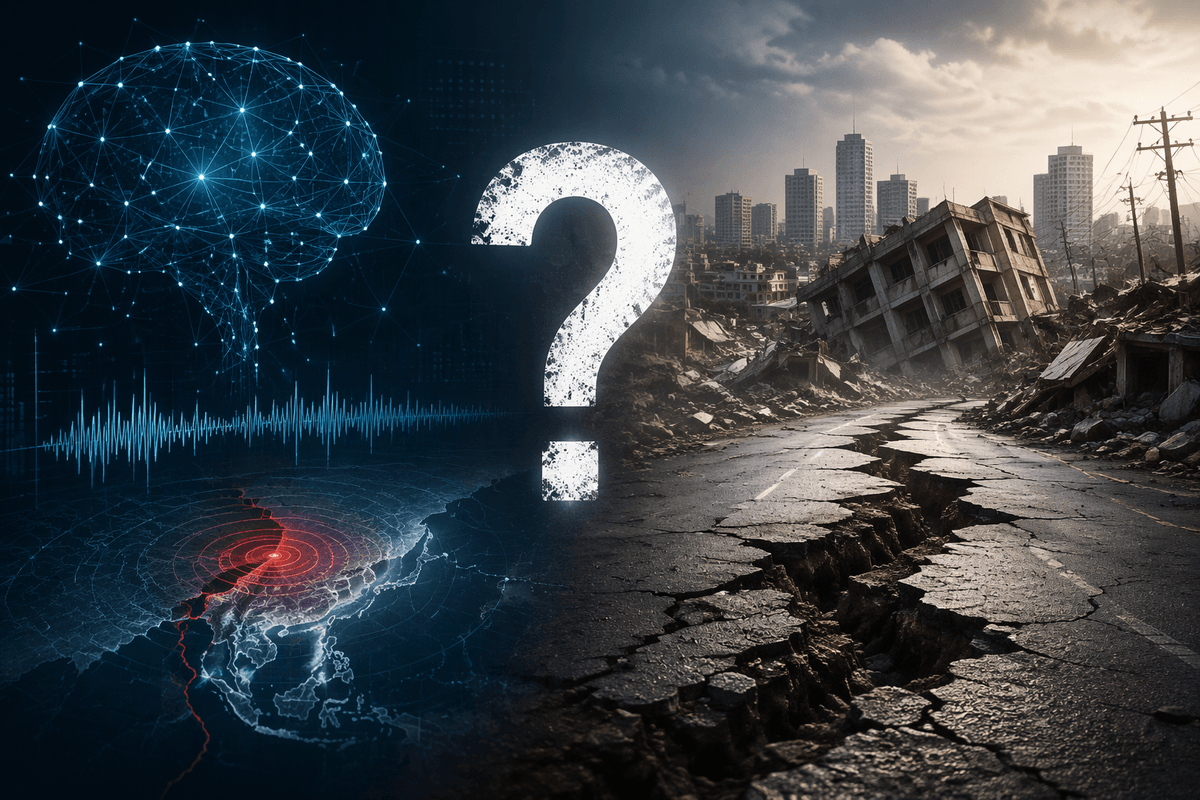
You’ve probably seen the pitch: earthquakes leave subtle “signals” before they happen, sensors collect those signals, and AI finds patterns humans miss. That sounds plausible because it matches how machine learning succeeds in fields like image recognition or fraud detection—lots of examples, clear labels, and repeatable conditions. Earthquakes don’t behave that way. Most large quakes do not provide consistent, measurable precursors, and the same fault can sit quietly for decades before failing in a way that looks sudden at human timescales. Without stable warning signs, AI often ends up learning coincidences in noisy data.
The other reason prediction feels within reach is that we can explain earthquakes after the fact. Maps show faults, reports list foreshocks, and seismic traces reveal stress changes. But explanation is easier than advance notice. A real prediction has to specify when and where a damaging quake will occur—and be right often enough that people trust it. A system that cries wolf, even with good intentions, carries costs: unnecessary evacuations, business shutdowns, and a public that may ignore the next alert. That’s why “AI prediction” claims need to be judged by consistent, prospective performance, not compelling retrospective stories.
What “reliable” would require in real life

Picture what “reliable” would mean if you’re a mayor deciding whether to shut down subways, or a hospital director choosing to cancel surgeries. The alert can’t just say “elevated risk.” It needs a clear time window, a defined area, and a meaningful range of expected shaking—plus an explicit uncertainty you can plan around. A warning that covers a whole region for “the next few days” is hard to act on because it forces expensive decisions without narrowing the target.
Reliability also has to be measured the hard way: issued in advance, logged before the outcome is known, and evaluated over years. You’d want low false-alarm rates (so people don’t tune out), but also high detection of truly damaging events (so it isn’t “accurate” by staying quiet). And because big earthquakes are rare, a system can look impressive by chance unless it beats simple baselines—like long-term hazard maps or “nothing unusual today.” If it can’t outperform those in prospective tests, it isn’t operational prediction.
The data problem: earthquakes aren’t like images
Think about what makes image AI work: millions of clear examples, each with an unambiguous label like “cat” or “not cat,” and new photos that broadly resemble old ones. Earthquakes don’t offer that kind of training set. The events people most want predicted—large, damaging earthquakes in a specific area—are rare, so there aren’t many “positive” examples. Meanwhile the background is enormous: years of quiet days, routine microquakes, sensor glitches, changing station coverage, and construction noise that can look like patterns if you hunt long enough.
Even defining the label is messy. Is the “right” target the rupture start time, the first strong shaking at a city, or a threshold magnitude within a region? A model trained on one definition can look good on paper and fail operationally. Add the physics problem: many faults load silently until they don’t, and the same fault can fail in different ways. AI is powerful at spotting repeatable cues; it struggles when the underlying process doesn’t reliably announce itself.
Where AI helps today: forecasting, not prophecy
Consider the kind of information people already use without calling it “prediction”: building codes based on expected shaking, insurance pricing, and maps that show which faults are more likely to produce strong motion over decades. That’s forecasting—probabilities over a defined area and time scale—not a promise that a quake will happen on Tuesday at 3 p.m. AI can improve parts of this pipeline today by digesting messy seismic catalogs, integrating GPS deformation, satellite observations, and local geology, and producing better calibrated estimates of where risk is rising or where aftershocks are most likely in the coming hours to weeks.
Those gains can be real and measurable, but they still face operational constraints. Forecasts are only useful if they are stable enough to inform decisions, and if they outperform simple baselines. They also depend on sensor coverage and consistent data quality; gaps in instrumentation or changing networks can quietly break a model. The practical upside is narrower and more grounded: better short-term aftershock probabilities, improved shaking estimates for response planning, and clearer communication of uncertainty—tools for preparedness and resource allocation, not a last-minute evacuation clock.
Why short-term prediction keeps failing hard tests
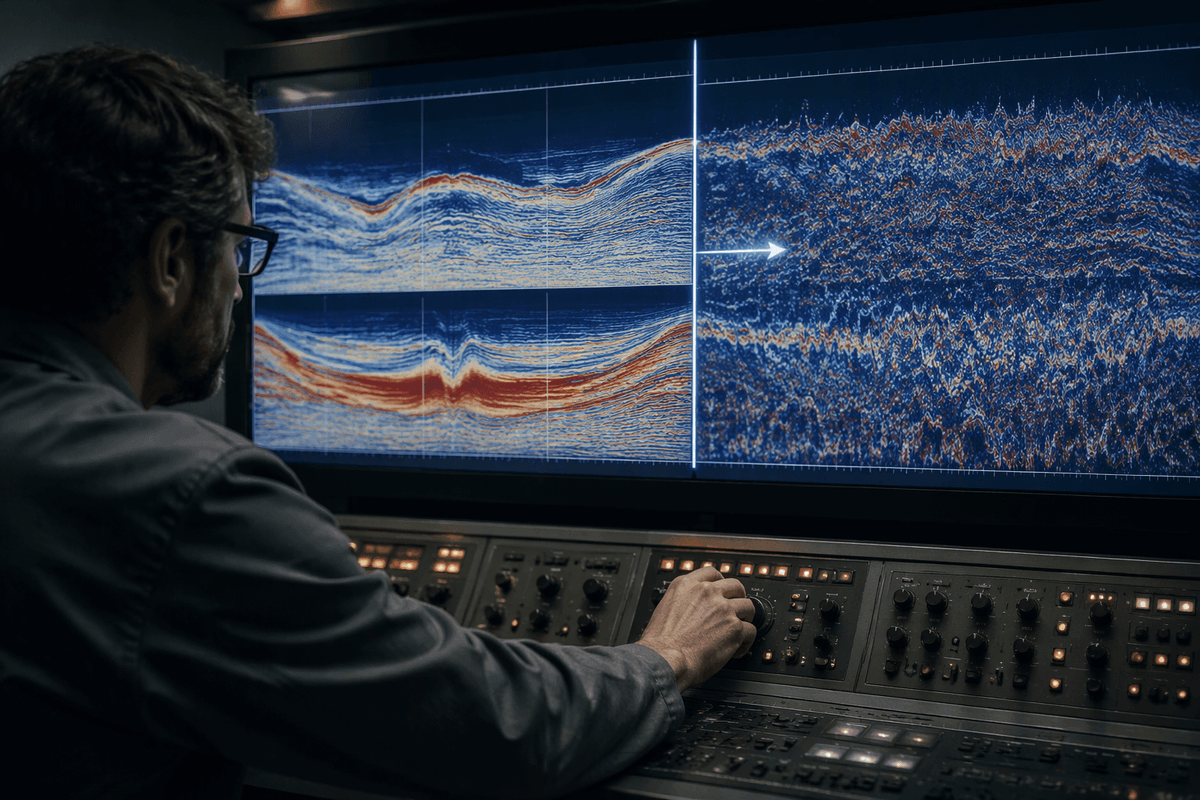
Someone reports a pattern—odd ground noise, a cluster of tiny quakes, an electrical anomaly—and the temptation is to treat it like a countdown. The hard test is whether those cues consistently appear before damaging earthquakes, in the same way, often enough to justify action. In most places they don’t. Small swarms usually fade without a big rupture, and many large earthquakes arrive without a distinctive prelude that stands out from everyday seismic clutter. When AI is trained on historical data, it can mistake “things that sometimes happen before quakes” for “things that mean a quake is imminent,” especially when the model is rewarded for finding any separable signal in a sea of quiet days.
Short-term prediction also runs into a base-rate problem. If a magnitude 6+ quake is rare in a given area, even a model that flags “unusual” days can generate far more false alarms than true warnings, which quickly becomes socially and economically expensive. Worse, retrospective success is easy to overstate: you can tune thresholds after the fact, choose a convenient region, or highlight the few hits and ignore the many misses. Prospective tests—publishing alerts in advance with fixed rules—tend to expose that fragility.
Early warning vs prediction: seconds that matter
You may already be benefiting from something that looks like “prediction” but isn’t: earthquake early warning. When a rupture begins, instruments near the source detect the fast, weaker P-waves and estimate location and magnitude quickly enough to alert places that will soon feel the slower, stronger S-waves. That lead time is measured in seconds to tens of seconds, not hours or days, and it arrives only after the earthquake has started. It can still be invaluable: trains brake, surgeons pause, elevators stop at the nearest floor, gas valves can shut, and people can drop, cover, and hold on.
Early warning has hard limits that explain why it doesn’t settle the prediction debate. If you’re close to the epicenter, the alert may arrive too late. Magnitude estimates can change as the rupture grows, so the first message may under- or over-shoot. The system also depends on dense, well-maintained sensor networks and reliable communications—real costs that many regions struggle to fund—so “seconds that matter” aren’t evenly available to everyone.
So what should people and cities rely on now?
If you live with earthquake risk, the practical stance is to treat “AI prediction” claims as unproven until they show long, prospective track records with clear error rates—and until someone can explain what decision they justify and what it costs when they’re wrong. What works now is less dramatic: strong building codes and retrofits, securing heavy furniture, resilient utilities, practiced response plans, and hazard maps that guide land use and investment. At the city level, fund dense instrumentation and communications that make early warning more reliable, and use AI where it is strongest: improving aftershock forecasts, shaking estimates, and resource staging—not promising a date and time.