AI makes content faster—brand consistency harder
You can ship more copy in a week with AI than you used to ship in a month, and that speed exposes a problem most teams didn’t notice when volume was lower: your “voice” wasn’t written down clearly enough to survive scale. One prompt produces something crisp and premium, the next sounds casual, salesy, or oddly generic—especially when different people use different tools, templates, or last week’s “good example” as their north star.
The practical cost shows up fast: more rewrites, longer approvals, and small terminology slips that add up across emails, landing pages, ads, and support articles. In regulated or sensitive categories, it can also create compliance risk when AI improvises claims or tone. The goal isn’t to slow down; it’s to add lightweight guardrails so speed doesn’t turn into brand drift.
Define your non-negotiables before you prompt
Picture a teammate opening a blank chat and typing, “Write a launch email in our voice.” If your “voice” lives mostly in people’s heads, the model will fill the gaps with its defaults. Before you touch prompts, decide what cannot change across channels, even when the format, audience, or writer changes.
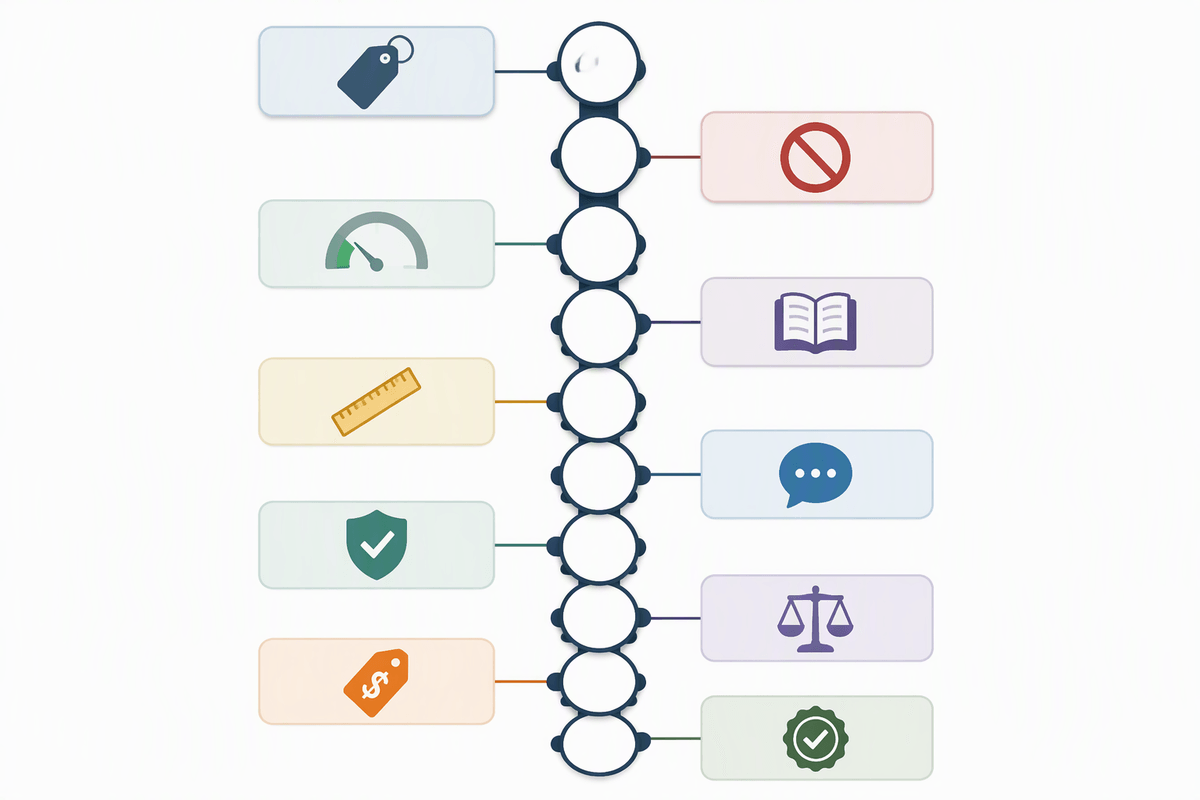
Start with a short list you can enforce: approved product names and feature terms; words you never use; your stance on hype (no “revolutionary,” no urgent scarcity); reading level and sentence length; and how you talk about customers (second person, no snark, no guilt). Add guardrails for risk: claims must be sourced, pricing and legal language must match the latest approved copy, and comparisons require named proof. Keep it small on purpose—too many rules create slow debates and inconsistent enforcement. A tight set of non-negotiables gives every prompt a stable spine.
Translate brand guidelines into AI-ready inputs
Most brand guidelines read like a poster on a wall: “confident, human, modern.” A model can’t apply that reliably unless you convert it into decisions it can follow. Take each fuzzy adjective and define what it looks like on the page. “Confident” might mean short sentences, few qualifiers, no exclamation points, and benefits stated as facts only when you can support them. “Human” might mean contractions, plain verbs, and a single concrete example in longer pieces.
Then turn guidelines into reusable inputs: a “voice card” (10–15 bullet rules), a terminology list (approved names, banned words, capitalization), and a message hierarchy (primary promise, proof points, what not to claim). Add three paired examples: one paragraph that’s on-brand, one that’s off-brand, and the corrected version. Models learn patterns fast when you show contrast.
Terms change, offers rotate, legal language updates. If your AI-ready inputs aren’t owned by someone and refreshed on a schedule, yesterday’s “approved” phrasing becomes tomorrow’s drift.
Prompts that keep voice without sounding robotic
A common failure mode is over-specifying the voice until everything comes out stiff: “Use three short sentences. Avoid all adjectives. Include one metaphor.” Instead, structure prompts around choices your best writers already make. Give the model a role and audience (“You’re our product marketer writing to IT leads”), then add a small “do/don’t” list pulled from your voice card, plus the one thing that matters most in this asset (clarify value, reduce risk, drive a next step). Ask for two variants with different emphasis, not five random options.
Keep it natural by prompting for reasoning, then output. Have it write a quick “voice check” before the draft: “List 5 rules you will follow (no hype, plain language, approved terms only).” Then: “Draft the email. Afterward, highlight any sentence that might sound generic and rewrite it using one concrete detail from the product notes.” These steps add a minute or two per run, but they reduce the back-and-forth that kills speed later.
A review loop that catches subtle brand drift
Brand drift often appears in small changes that seem harmless at first: a synonym replaces an approved product term, a promise becomes less precise, the call to action sounds more forceful, or the customer’s problem is described differently. Catching these shifts takes a consistent review process that goes beyond proofreading. A short checklist should cover approved terminology, alignment with the value proposition and message hierarchy, evidence for factual claims, and tone. The copy should avoid hype, guilt, and unexpected humor, while keeping calls to action consistent with the brand’s usual level of directness.
Review stays manageable when teams distinguish essential corrections from minor preferences and adjust the depth of review to the volume of work. Every asset might undergo an automated scan for terminology and prohibited wording, while one in five receives a more detailed voice review, with regulated copy reviewed individually. Save examples of edits in before-and-after pairs so future prompts and voice guidelines reflect the decisions reviewers have already made. Reviewer capacity still matters: without clear criteria for approval, brand review can turn into subjective rewrites that consume the time AI was meant to save.
Keep a single source of truth across channels

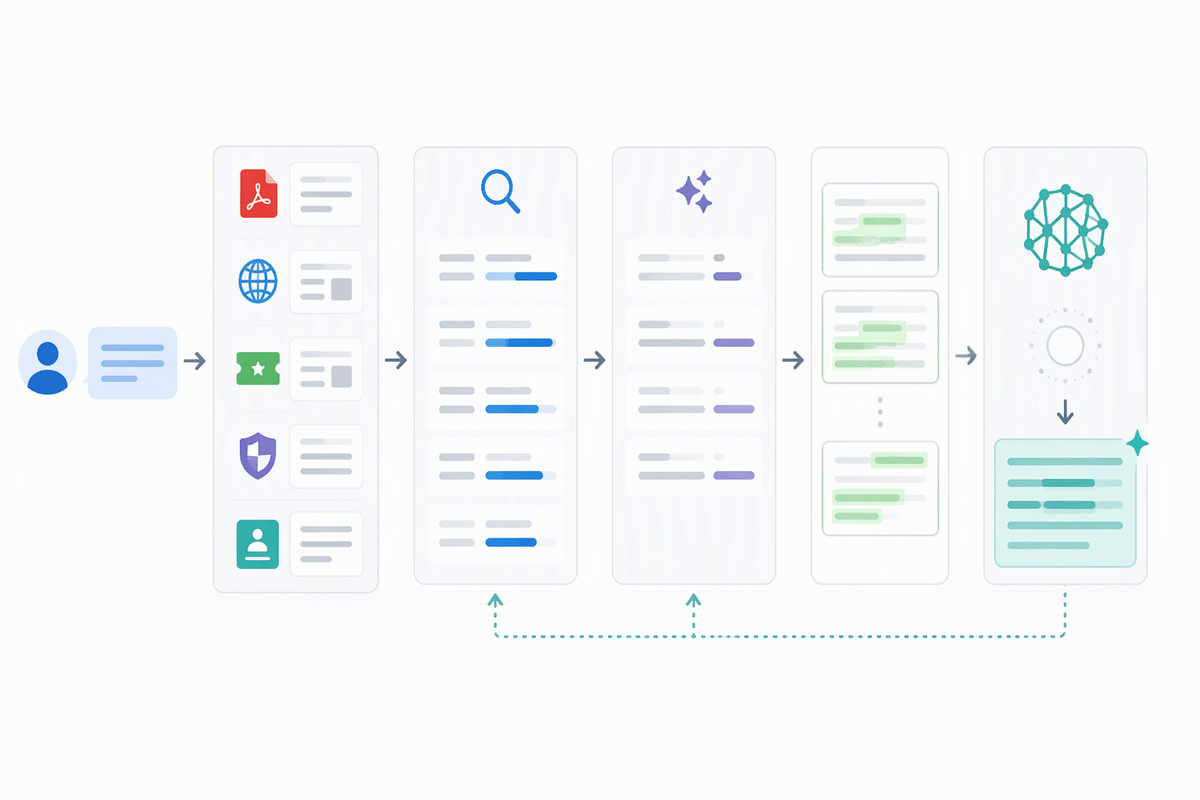
Brand inconsistency becomes apparent when the same feature is described in different ways across channels. The homepage calls it “automated reporting,” the sales deck uses “smart reporting,” and support articles refer to “scheduled reports.” AI can widen these differences by generating plausible alternatives unless it has a reliable reference to follow. The solution is to establish one shared source for approved messaging and terminology, rather than trying to solve every inconsistency through more detailed prompts.
Maintain a central document containing the message hierarchy, approved terms, current offers, required disclaimers, and examples of successful copy for each channel. Keep it dated and versioned, and assign an owner responsible for confirming which information remains current. Consistency across email, websites, advertising, and support materials also depends on teams using this shared reference instead of maintaining separate prompt documents. When accuracy matters, prompts should quote the approved wording directly rather than paraphrase it.
Scale governance without slowing the team down
Governance works when it’s embedded in how work gets done, not bolted on as a final gate. Standardize a few reusable building blocks: one approved prompt template per asset type, a short preflight checklist, and “gold” examples that new writers can copy without guessing. Then automate what you can—terminology checks, banned-words scans, required disclaimer insertion—so reviewers spend time on meaning and risk, not cleanup.
Keep decisions close to the work. Let channel owners approve updates to the voice card and source-of-truth doc on a set cadence, while day-to-day drafts move with clear stop-rules: what needs brand review, what only needs peer review, and what can ship after automated checks. The cost is upfront setup and ongoing ownership, but it protects speed as volume grows.