Why add Bing-backed web results to Meta AI
You’ve probably seen Meta AI answer a question in Instagram or WhatsApp and wondered: is this coming from the internet, or is it just “making something up”? Adding Bing-backed web results is mainly about reducing that uncertainty for anything time-sensitive or niche—new product prices, sports schedules, a brand’s latest campaign, or a breaking news summary. A language model can sound confident while being stale; web retrieval gives it current pages to lean on.
It also changes how you should judge the output. When Meta AI is using web results, you’re closer to a condensed search experience: faster synthesis, but still dependent on what Bing found and which sources ranked well. The queries may be shared with a search provider, and results quality can vary by topic, region, and publisher coverage.
Decide what “web results” should look like
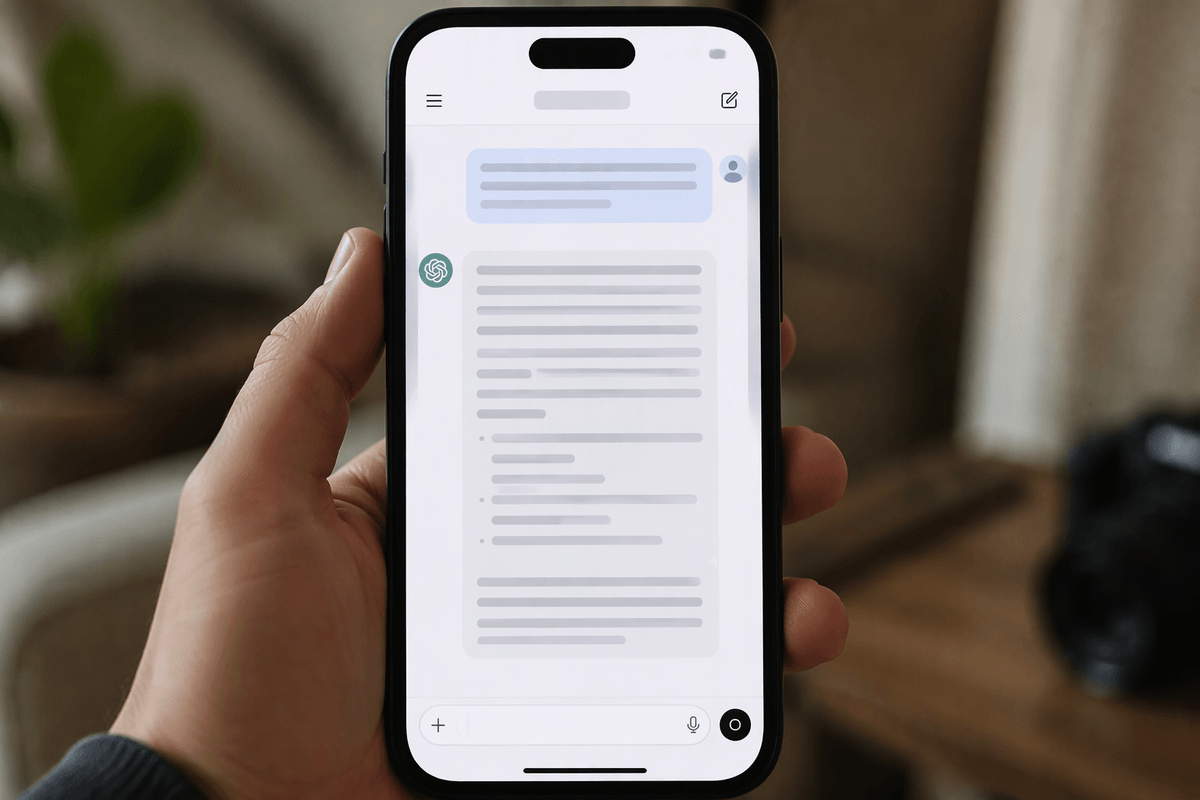
If you type “What’s the best mirrorless camera under $1,000 right now?” you may expect a familiar list of links. But a chat surface has to decide how much of that “search page” to show. One approach is a clean, single answer that quietly uses web pages in the background. Another is a hybrid: a short answer plus a visible “from the web” panel that lists a handful of sources, dates, and a way to open them outside the chat.
The design choice matters because it sets your expectations for reliability. If you can’t tell whether Meta AI is summarizing pages or generating from memory, you also can’t tell when you should double-check. Good “web results” UI makes the boundary obvious: it labels when browsing happened, shows which sources influenced the answer, and flags freshness (for example, “updated today” versus “published in 2022”). The cost is clutter and more taps, especially on mobile, and not every query deserves the extra surface area.
Architecture choices: direct Bing calls or middleware
Picture the simplest version: you ask a question, Meta AI sends a query straight to Bing, gets back top results, and then writes an answer grounded in those snippets. That “direct call” approach can be faster and easier to reason about, but it also means more of your request travels to an external provider in a form that may include location hints, language, and device context. It can also make it harder for Meta to standardize behavior across Instagram, WhatsApp, and Messenger if each surface tunes search slightly differently.
Meta runs an internal layer that receives your question, cleans and rewrites it, decides whether web lookup is even needed, and only then queries Bing. That layer can add guardrails (block certain categories, strip identifiers, cache popular queries, enforce region rules) and log consistent metrics for quality. The trade-off is cost and latency—an extra hop, more infrastructure, and more places for ranking and filtering to go wrong in subtle ways.
Getting better results: query rewriting and reranking

Ask “Is the new Pixel worth it?” and you’ll see why raw web search can misfire. That phrasing is vague, so a good system quietly rewrites the query into something Bing can answer: “Google Pixel [model] review,” “Pixel vs iPhone [current model],” “Pixel battery life test,” and it may add your language, country, and “past week” hints when freshness matters. Done well, this feels like the assistant “understood you,” but it’s really a series of targeted searches behind the scenes.
Reranking is the second pass: Meta AI can take Bing’s top results and reorder them for your intent—prioritizing hands-on reviews over store listings, official policy pages over forum guesses, or newer coverage over evergreen explainers. More rewritten queries and more reranking models usually mean higher latency, more compute, and more opportunities to overfit to “popular” publishers while missing smaller, high-quality sources.
Grounding the chatbot: citations, quotes, and freshness
You’ve likely noticed two very different “feels” to an answer: a smooth paragraph that reads like general knowledge, versus a response that points to specific pages and dates. Grounding is what turns the second kind into something you can audit. The most useful pattern is lightweight citations: a short list of sources that influenced the answer, with publisher names and publish dates, plus a clear label when the assistant actually browsed. Without that, “Bing-backed” can still be indistinguishable from a confident guess.
Quotes are a sharper tool and a riskier one. A brief excerpt can prove the assistant didn’t invent a claim, but quoting too much creates copyright and licensing problems, and quoting too little can strip needed context. Freshness is the other pillar: the assistant should surface “as of” timestamps, prefer recent sources for time-sensitive topics, and say when results are old or sparse. The freshness and citations add latency and screen clutter, especially on mobile, so some experiences will hide them unless you expand details.
Safety, policy, and compliance gotchas early
Questions such as “Is this supplement safe?” or “Can I deduct this expense?” show why web-backed assistants need careful safeguards. Search results may include useful evidence, but prominent pages are not always reliable. Some are promotional, outdated, or written for a different country. Medical and legal topics therefore need clear limits, policy questions should prioritize official sources, and conflicting evidence should prompt the assistant to acknowledge uncertainty. Without these safeguards, a confident answer may appear most credible precisely when the evidence is weak.
Compliance concerns are less visible but still shape the user experience. Web searches may send queries, along with contextual details such as language, region, or device information, to search providers, where some data may be logged for debugging and quality review. Product teams must also respect copyright restrictions on quotations, manage defamation and impersonation risks when summarizing information about people, and apply age-appropriate filters. These protections add friction, including more refusals, reminders to check original sources, and occasional missing results when strict filtering excludes potentially unreliable material.
Testing and monitoring before you ship broadly
You’ve probably seen a feature work fine for obvious prompts, then fail on messy real ones: a half-typed question, slang, or “what’s the policy in my state?” That’s why testing has to include blind comparisons (with and without web lookup), latency targets on mobile networks, and “can you tell it browsed?” checks for the UI. It also needs red-team prompts that try to trigger unsafe topics, prompt injection inside retrieved pages, and citations that don’t actually support the claim.
After launch, monitoring is mostly about drift. Sources change, rankings shift, and a once-reliable query rewrite can start pulling the wrong entity. Teams watch citation click-through, contradiction rates across sources, and fallback frequency when Bing returns thin results. The constraint is cost: continuous evals, human review, and logs (handled with privacy controls) add real overhead, so not every market or language gets the same depth on day one.