Why faster literature reviews suddenly feel necessary
You can feel the pressure the moment a “quick background scan” becomes a deliverable. A grant deadline, a product decision, or a thesis proposal asks for a defensible view of a field that has quietly doubled in size since the last time you looked. Search results now mix preprints, conference versions, and revised journal articles, and it’s easy to lose hours just deduplicating and sorting.
At the same time, expectations have shifted. Teams want an evidence map, not a reading list, and they want it fast enough to inform decisions. The bottleneck isn’t only reading speed; it’s the logistics of finding, filtering, and tracking what you considered. Faster reviews feel necessary because the cost of being “slightly outdated” is now visible in peer review, stakeholder questions, and missed prior work.
What AI can do well in early scanning
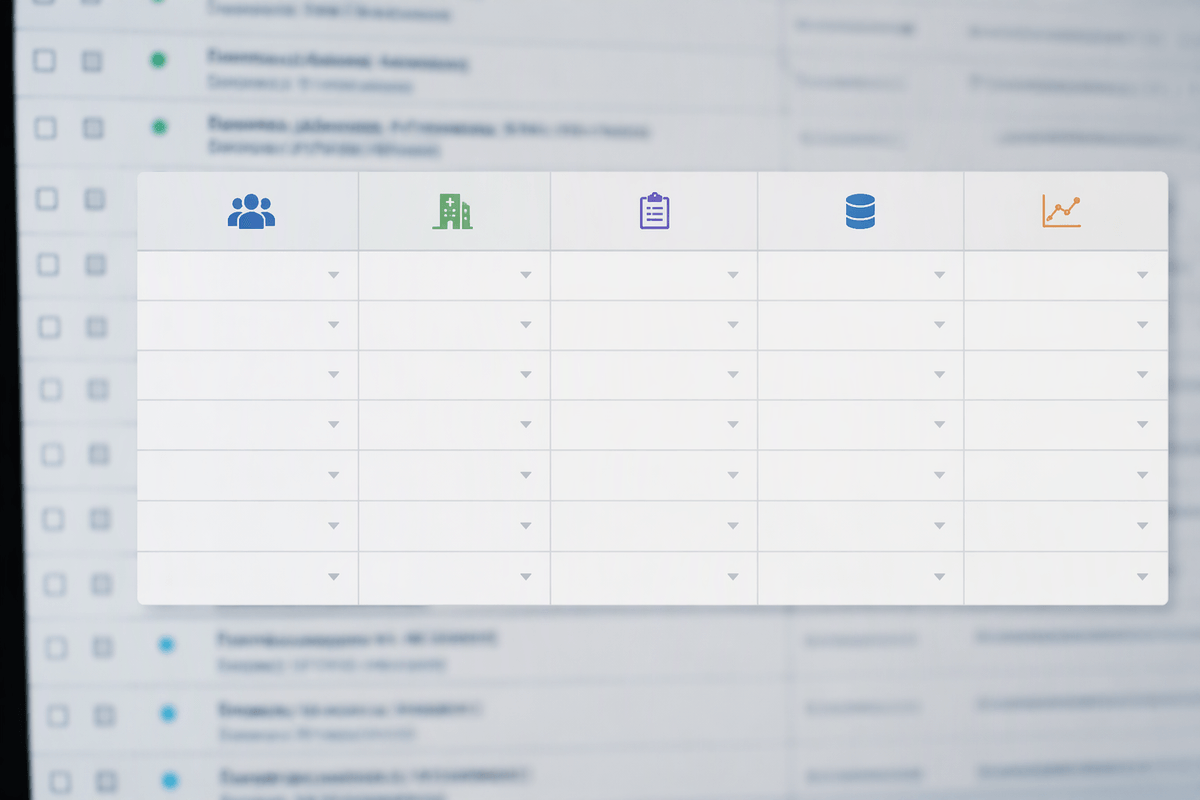
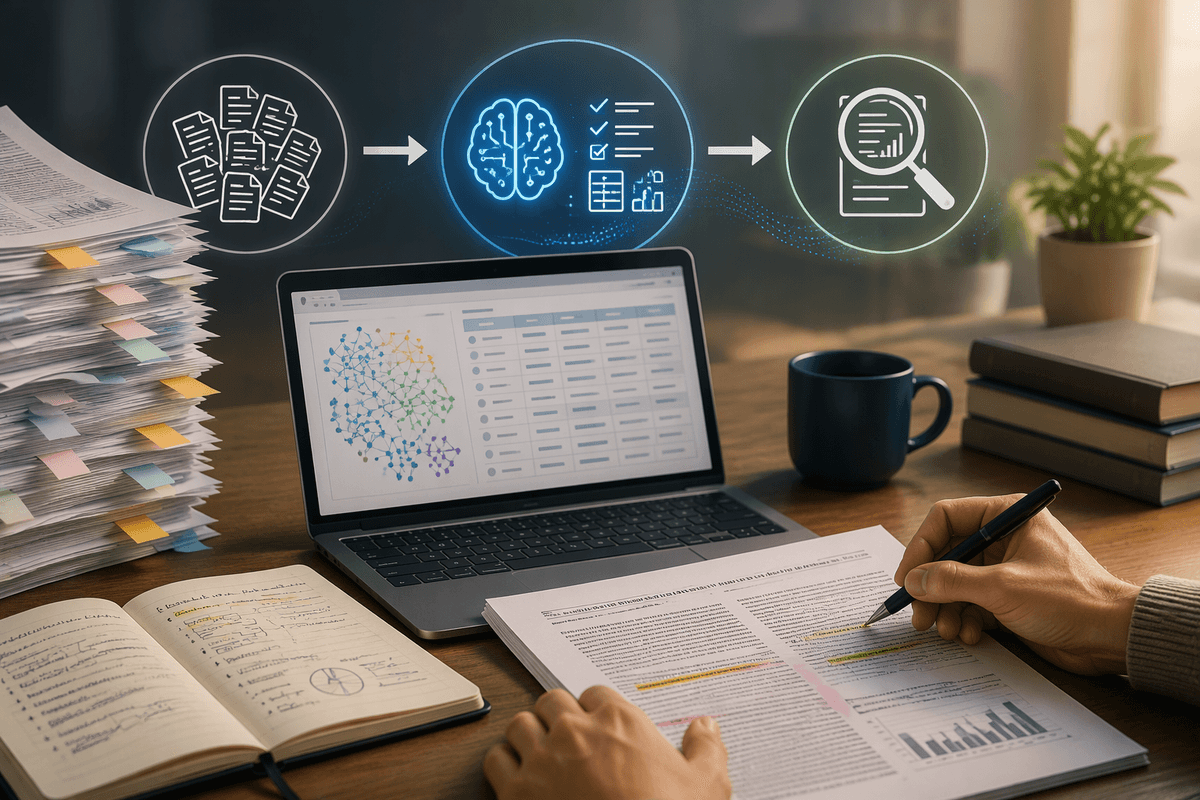
You open a database search and get hundreds of hits that are “maybe relevant,” with titles that are either too vague or too jargon-heavy to judge quickly. This is where AI tends to help most: it can expand your queries (synonyms, related methods, alternative spellings), cluster results by recurring terms, and propose inclusion cues to speed up first-pass triage. Used this way, it’s less a decision-maker and more a high-throughput assistant that reduces the time you spend on obvious exclusions.
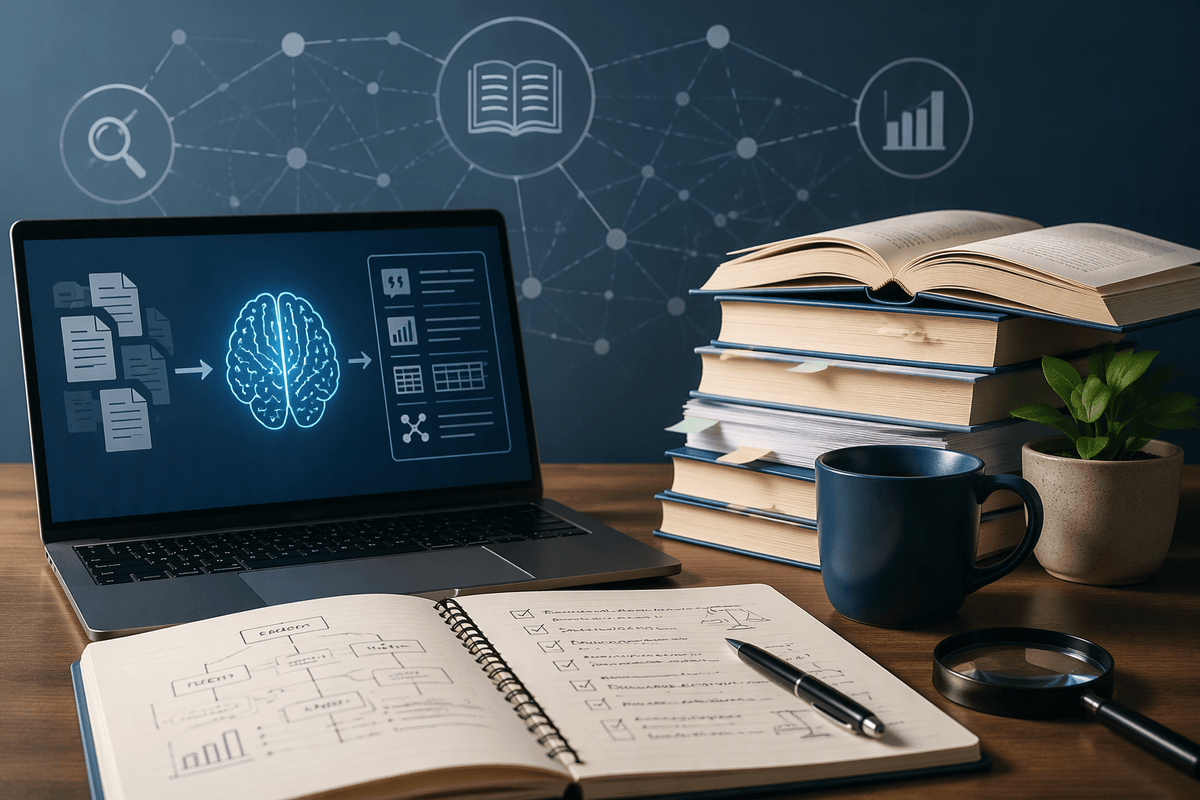
Early scanning also benefits from structured summaries: extracting objective elements like population, setting, method, dataset, and outcomes—then laying them out in a table so you can compare papers without rereading abstracts five times. This only works when the tool is grounded in the actual text you provide; if it is guessing from a title, partial abstract, or memory of similar papers, it will confidently fill gaps. Treat AI outputs as a draft index of claims to verify, not as evidence.
Choosing tools without chasing the newest model
Discussions about the “best model for literature reviews” often focus on impressive features while overlooking the problems that arise during actual research. Prompts may break after interface updates, exports may not match your citation manager, and maintaining a complicated setup can take more time than reading the papers themselves. Start by identifying your working requirements: whether you need access to subscription databases, whether full-text PDFs can be uploaded or only abstracts are available, and whether collaboration, version history, and a record of screening decisions are necessary.
Different tools also serve different purposes. Query expansion and initial screening require dependable results and easy iteration more than elaborate features. For summarization, prioritize tools that reference exact passages in the supplied papers so claims can be verified quickly. When mapping themes across studies, consistent tagging and reliable exports in formats such as CSV, BibTeX, or RIS are generally more useful than elaborate visualizations. Since no single tool handles every stage equally well, combine a small number of complementary tools and test the workflow on around 20 papers before committing to it.
A workflow that keeps humans in control
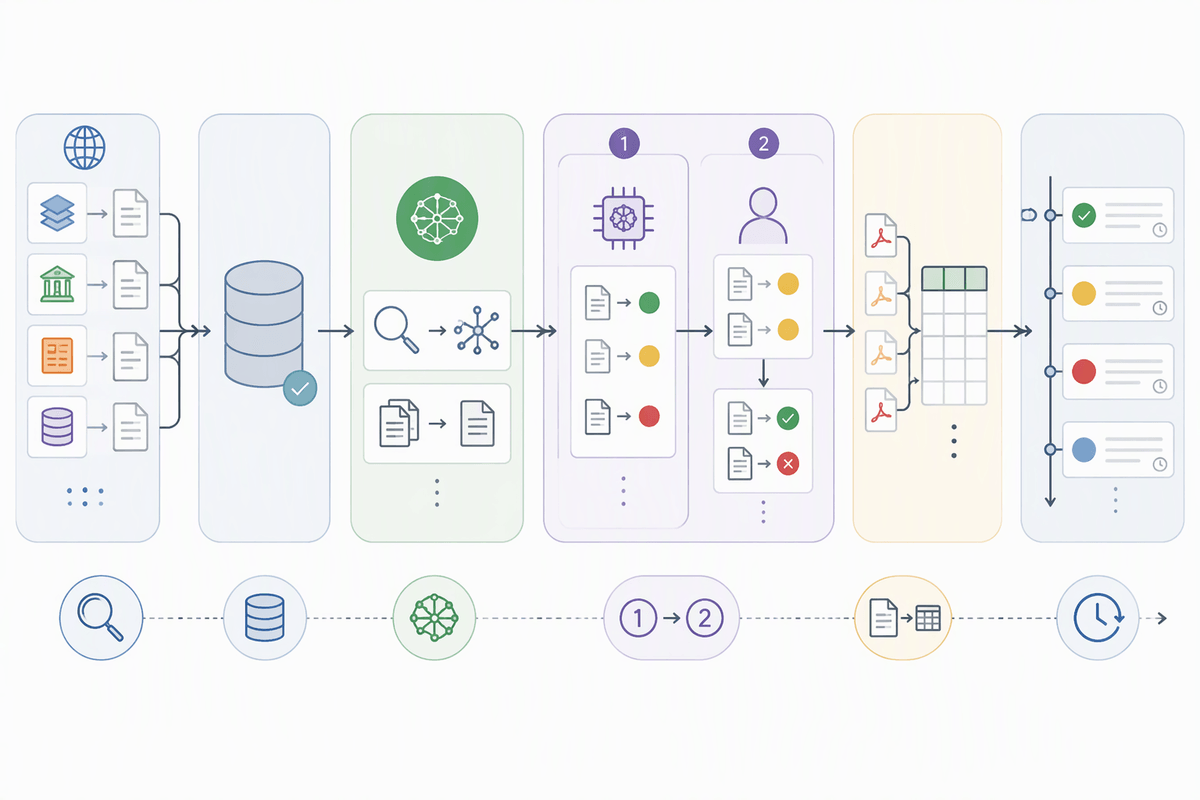
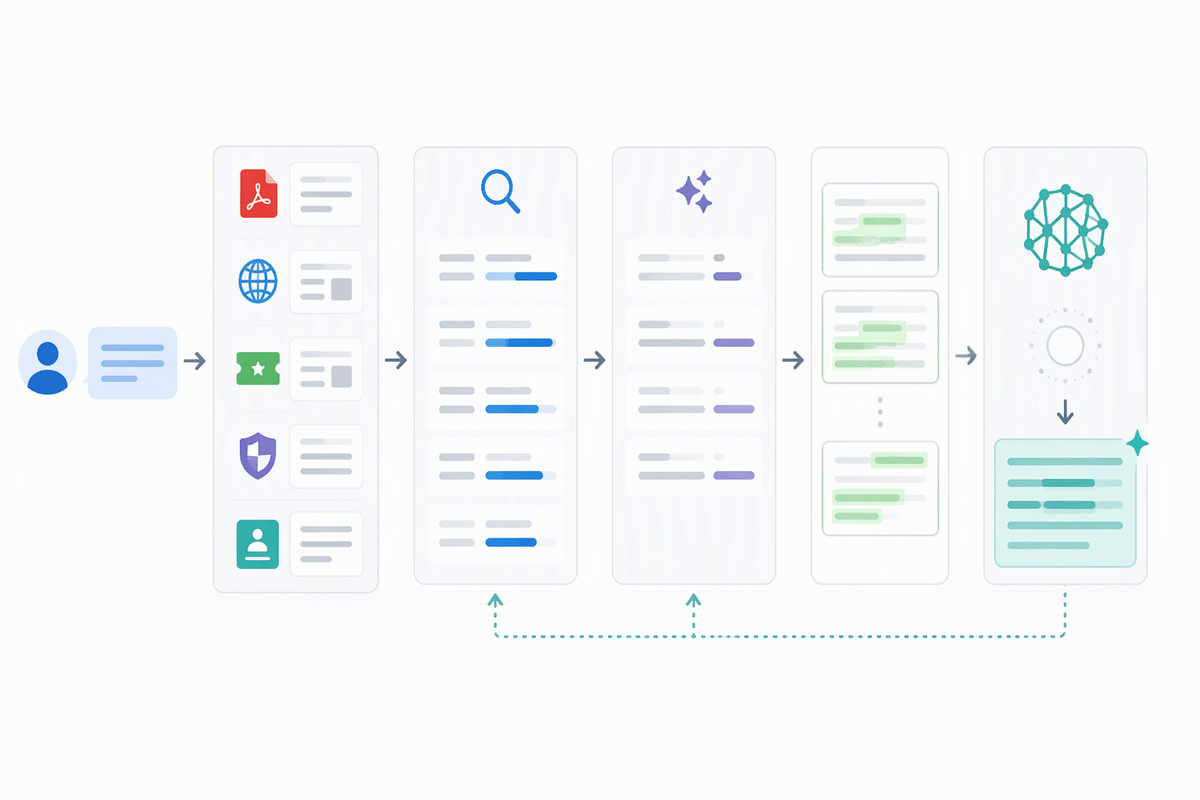
You pull 300 search hits into a spreadsheet and immediately face a familiar tension: moving fast means leaning on shortcuts, but defensible means leaving a trail. A controlled workflow starts by separating “retrieval” from “judgment.” Let AI help you broaden queries and normalize metadata (deduplicate, standardize keywords, flag likely study types), but keep inclusion and exclusion criteria written in plain language before the model touches anything. Then run a two-pass screen: a quick AI-assisted pass that labels records with reasons (out of scope population, wrong outcome, commentary) and a human pass that spot-checks the border cases and verifies that the reasons map to your criteria, not to the model’s guesses.
For papers that survive screening, switch from “summary” to “extraction.” Ask the tool to fill a structured template (design, sample, measures, comparison, main results, limitations) only from the PDF or full abstract you provide, and require verbatim snippets for every filled field so you can confirm accuracy in seconds. Keep a running “decision log” with versioned exports, because the practical cost of speed is rework: when a collaborator challenges a theme or a reviewer asks why a study was excluded, you need to reproduce what you did, not reconstruct it from memory.
Critical reading doesn’t disappear—it moves downstream
AI can help group papers, extract key details, and organize findings into tables, but the more demanding reading still matters. With the initial sorting done, attention can shift to questions that summaries tend to overlook: what counts as evidence in each study, which variables the authors controlled for, and what alternative explanations remain plausible. Comparing two studies that report similar effects is a useful starting point. Their findings may differ in reliability because of differences in sampling, measurement validity, missing-data handling, or model specification, even when their abstracts sound alike.
Closer reading also helps establish whether an apparent theme reflects a genuine pattern or simply a label that fits several unrelated studies. Treat AI-generated observations as hypotheses to check. For example, the system may suggest that several papers examine mediation, reuse the same datasets, or define an outcome in different ways. Read the methods and limitations sections to determine whether those observations hold up. This verification takes time and may mean including fewer papers, but a smaller body of evidence that has been carefully evaluated makes for a more defensible review.
Common failure modes: confident summaries, wrong citations
You paste in a few abstracts, ask for “the main findings,” and get a clean, confident paragraph that reads like it came from a review article. The failure is that confidence is cheap. Models often smooth over uncertainty, merge nearby concepts, and quietly turn “associated with” into “causes.” They also drop boundary conditions—sample restrictions, exclusion rules, null results, sensitivity checks—because those details look like clutter to a summarizer. If you only read the AI output, you’ll miss the exact reasons a finding does or doesn’t travel.
Citations fail in a different way: a summary can be directionally right while the reference is wrong. Common patterns include mixing the conference and journal versions, attributing a method to the wrong paper in a cluster, or producing plausible-looking references that don’t match the claim. Treat every citation as a testable pointer: confirm the quote or table in the PDF, record page numbers, and flag any claim you can’t trace in under two minutes.
Using AI responsibly in publishable research
You eventually reach the point where speed stops being the goal and defensibility becomes the constraint. Treat AI as a drafting layer around your review, not the authority behind it: you can use it to propose themes, phrasing, and comparisons, but every claim that survives into a manuscript should be traceable to a specific passage, table, or figure you personally checked. Keep a transparent record of prompts, versions, and screening decisions, and disclose AI assistance when your venue expects it.
The practical difficulty is overhead: verification, page-level citation checks, and bias spot-checks take time and reduce the number of papers you can cover. That trade-off is often worth it, because a smaller, auditable review is easier to defend than a broader one built on untraceable summaries.